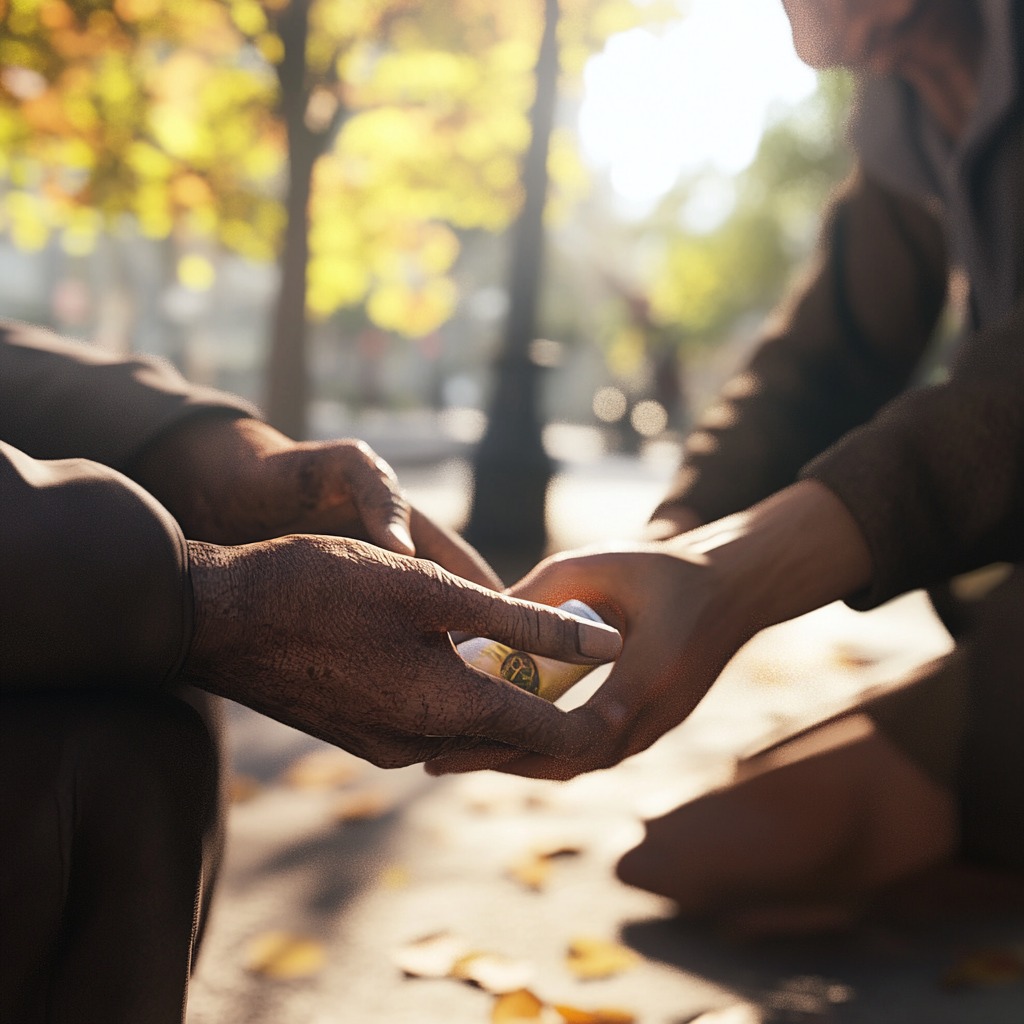
I pass him again today—the man standing on the corner, holding a sign that reads Anything helps. I’ve seen him so many times before, and yet, each time, I notice the way people look away. They shift their gaze, pull out their phones, or pretend not to see him, as if by ignoring his presence, they can push the reality of his situation to the edges of their consciousness. It’s easier that way—easier to walk by and keep moving than to confront the suffering of another human being.
But in those moments, I find myself asking: When did we become so comfortable with avoiding the pain around us? What does it say about us when it feels safer to look away than to reach out?
Compassion calls us to do the opposite. It asks us to look directly into the faces we’re so quick to overlook and to acknowledge the stories we’ll never fully know. When Jesus tells us to love our neighbor, He doesn’t qualify it. He doesn’t say, Love only the neighbors whose lives are easy to understand. He simply says, Love.
We don’t always know what brings someone to the streets. It could be a family broken by addiction, a cycle of poverty, or perhaps an unexpected tragedy that left them without support. So often, our pasts reflect our futures. The home we’re raised in, the struggles we face, the wounds we carry—they shape us in ways that are often invisible to the outside world.
It’s easy to judge the person on the street corner, to assume that addiction or bad choices are to blame. But more often than not, those addictions are symptoms of a much deeper pain—a way of numbing wounds that have never healed. We cannot know the hurts they’ve suffered, nor can we see the full weight of the burdens they carry. But we can choose to see them as more than their circumstances. We can choose to offer grace instead of judgment.
In moments like these, I remind myself that true compassion isn’t about fixing someone’s life. It’s about stepping into their story, however briefly, and offering what we can—whether it’s a warm meal, a word of kindness, or simply meeting their gaze and saying, I see you. You matter.
The next time I pass him, I won’t just walk by. I’ll look him in the eye. I’ll ask him how he’s doing. And if there’s anything I can offer—whether from my own resources or through the help of others—I’ll give it. Because love asks us to act. And in that moment, I’ll remember that every act of compassion, however small, is a step toward healing the brokenness we so often look away from.
Author’s Note:
I thought I’d share a bit about why I intentionally avoided using the word “homeless.” My hope was to remind us that each person we encounter has a story—one that goes beyond labels and circumstances. Sometimes, it’s easy to overlook someone’s humanity when we only see their struggles. But each person, like the man standing on the corner, has a story that is worth seeing, even if we never fully know it. It’s about choosing to see people first, offering grace instead of judgment, and remembering that we all need compassion. This piece is a reminder that every small act of compassion—no matter how simple—can make a difference, not just for the person receiving it but for our own hearts as well.